Provoke and Con-pora VI Shigeo Gocho reconsidered: Familiar Street Scenes In Self and Others, the relationship conveyed via the photographs is limited to that between the self and others standing face to face, and the stage for the absorption in

Provoke and Con-pora V: Shigeo Gocho Self and Others Reconsidered In my opinion only one individual, Shigeo Gocho, strikes me as standing out in this period as a representative of the theatrical first-generation post-modernist type. It would be impossible to

Provoke and Con-pora IV: Post Con-pora Expression The Con-pora photography of Japan has a characteristic that the original Con-pora photography could never have had. That is, an American flavor that was somewhat liberated from the prevailing sense of Japan at

Provoke and Con-pora: In the blank space of ‘1968 – Japanese Photography’ (Tokyo Metropolitan Museum of Photography) III Every aspect of society has been turned into image, into media. The utopian “exterior” of the world is gone, and the world

Provoke and Con-pora: In the blank space of ‘1968 – Japanese Photography’ (Tokyo Metropolitan Museum of Photography) II Awareness of the fact that, as a result of the inundation of image information, the real world itself is being turned into

Provoke and Con-pora: In the blank space of ‘1968 – Japanese Photography’ (Tokyo Metropolitan Museum of Photography) I Shigeo Gocho, from the series “Hibi – Day to Day” (1967-70) Settling the question of whether theories on Con-pora are

Flowers of Japan: Katsuyuki Shirako: “exhibition 4” @ eN arts untitled (2009), from the “scribble” series. All images: © Katsuyuki Shirako, courtesy eN arts, Kyoto. In every genre, the postwar Japanese craft movement has experienced the misfortune of

From ‘negative’ eternity to ‘positive’ eternity: Mansai Nomura and Hiroshi Sugimoto – SANBASO, divine dance Kami hisomi iki II (Part 2) Scene from Mansai Nomura and Hiroshi Sugimoto’s SANBASO, divine dance Kami hisomi iki II. © Sugimoto Studio, courtesy
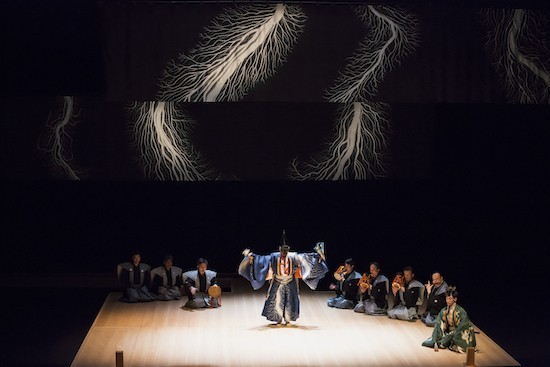
From ‘negative’ eternity to ‘positive’ eternity: Mansai Nomura and Hiroshi Sugimoto – SANBASO, divine dance Kami hisomi iki II (Part 1) Scene from Mansai Nomura and Hiroshi Sugimoto’s SANBASO, divine dance Kami hisomi iki II. © Sugimoto Studio, courtesy
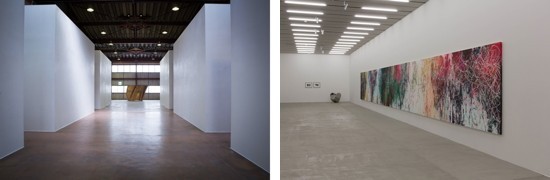
A cynical beginning – TOLOT heuristic SHINONOME The end of March was art fair week in Tokyo, but I found the art space TOLOT heuristic SHINONOME, newly opened in Shinonome, more interesting than the likes of Art Fair Tokyo and

‘B-grade horror’ reputation – documentation and mediacy The criticisms in my previous two columns dealing with Lieko Shiga’s exhibition “Rasen Kaigan,” or what have been dubbed the “Lieko Shiga = B-grade horror” theory, were penned to provide some balance to

The meaning of photography, or, B(latent)-horror effects (2) One can detect in Lieko Shiga’s photographs any number of effects familiar to us from “creepy photography.” Streaming light, water, etc. (ectoplasm, ethereal bodies, mysterious light, blood, liquid, etc.) Above: From