
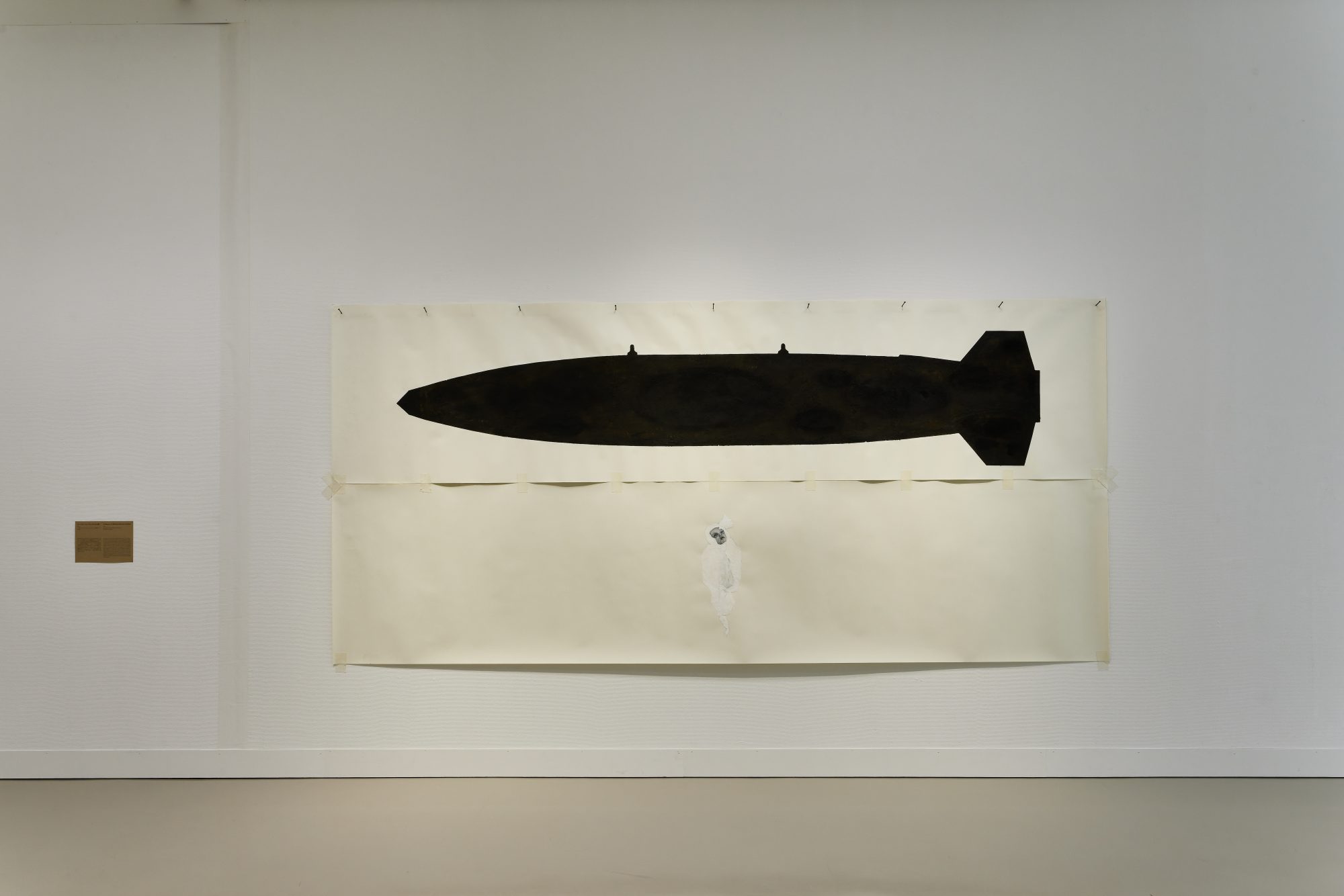
 Mel Chin, In Memory of Muhammad Hani Al-Zahar (2024). Photo: Kenichi Hanada
More bombs. The 2,000-pound bomb, an American-made weapon, is being used in Gaza, destroying the city. I don’t go about trying to make objects and statements about the things people do wrong. I’m not there for that. That’s not interesting to me. I wish I didn’t have to make anything about it at all. I wish there were the opportunity to focus on many things other than these critiques. But I think if you live in a society, part of it is practicing the good part of what the American system speaks about: freedom of speech and the power of that. Therefore, you should exercise it on the critical level, too, without fear. That’s why I do these things. I think that’s a rare opportunity in the world. This bomb eventually became an artwork that is also in this exhibition, In Memory of Muhammad Hani Al-Zahar. It consists of a full-scale image of the bomb, the MK-84, a 2,000-pound bomb, and a full-scale figure of a baby who was five months old.
Again, what causes a work like this to come about? Someone asked me, “Is it anger?” Maybe a little bit. Maybe shame. It can just stay there. But instead, I think you have to make a work. For me, I must make a work so I can get out of that position, because there’s no position to have discourse when you’re angry or ashamed or silent. If you’re silent, there’s no discourse, and it all lends itself to continued destructive behavior. Again, we’ll have to ask the grad students of psychology if I still need to see them. But I think I understand. This is a piece to think about a five-month-old child who was destroyed by the concussive effects of a bomb looming above him. It’s a simple juxtaposition. But it’s a position of trying to understand our world, and the conditions that brought about the end of his life. Why I do this is so we can see the connections between two people and two ideas.
When the image of him came out, what really drove this into being on top of everything else was the fact that the images of his death were ridiculed in some of the Israeli papers as just being a doll to promote propaganda. It was so sad that I could not believe it. So maybe it was anger, maybe it was shame. But it’s also sorrow — sorrow for the world that we’re in. You must come forward to relieve that. This is why a piece like this occurs.
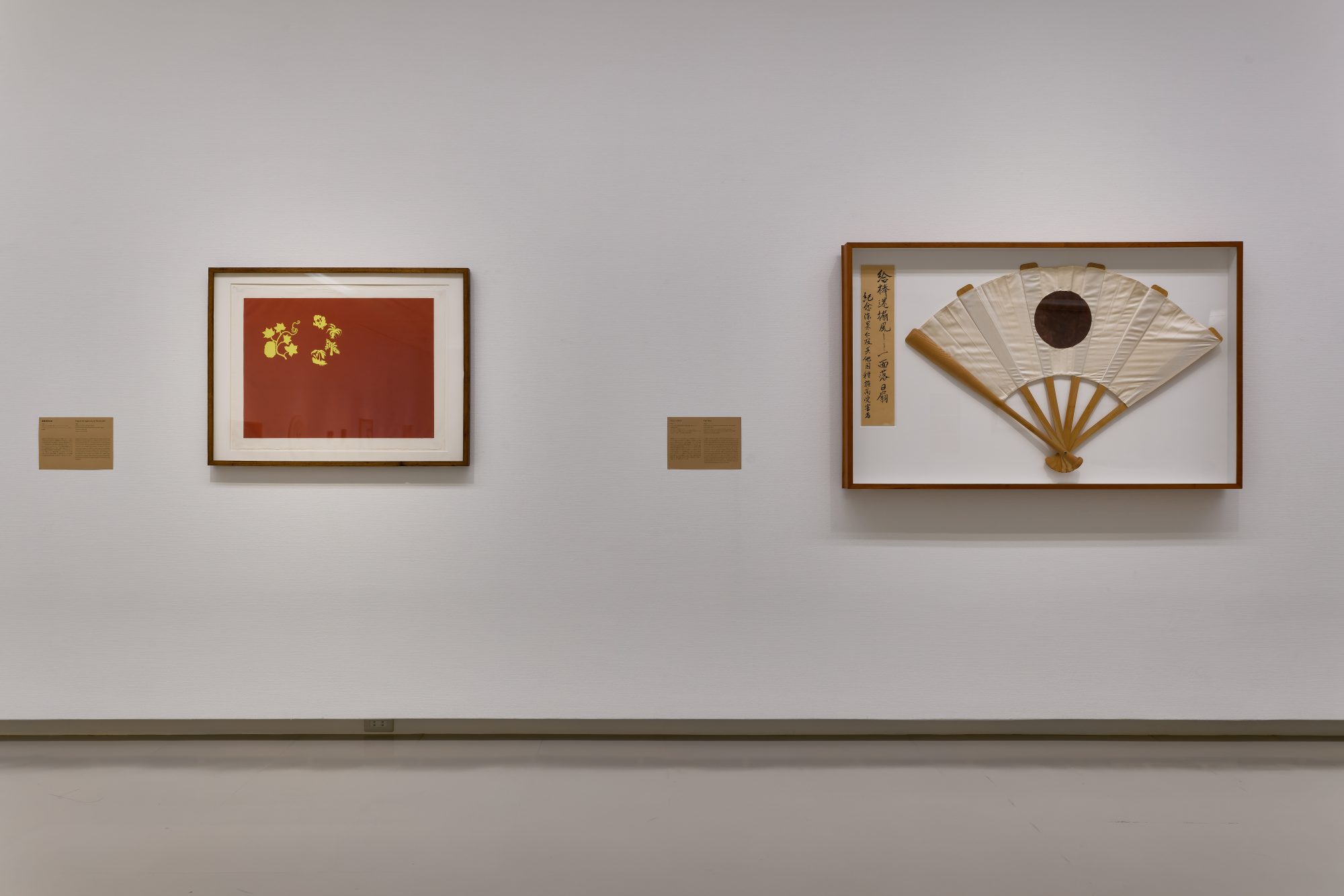 (from left) Mel Chin, Flag of the Agricultural Revolution (1996); Fan Club (1994). Photo: Kenichi Hanada
Next is the story of Vincent Chin. He’s not related to me. He had a fiancée, and he was at his bachelor party in Detroit. I don’t know if you have that here in Japan, but the day before you’re married, you go out with your friends on your last day of being single, and you kind of hang out and maybe drink. It happened at a time when Japanese cars were coming into America, and people were digging them, because they’re better on gas. But some people at the bar who were drinking thought Vincent was Japanese, and attacked him, and said, “You’re the reason why we’re out of a job. You’re the reason why we’re economically being compromised. You’re… you’re Japanese.” But Vincent is like me. He’s Chinese American. He was adopted, but he’s American. And we fight back when we’re hit. I lose a lot. But he fought back and actually knocked Ronald Ebens down and walked away — or so it’s said. Well, he was chased to a McDonald’s. He was sobering up, getting ready for his wedding. And Ronald Ebens shows up with a baseball bat, finds him, and beats him. It took a couple of days before he died.
That’s how the piece comes about: a fan made of baseball bats, Fan Club. This piece is like a “setting sun” bat fan, because they thought he was Japanese. The red sun at its center is a symbol of nationalism, and it’s painted with my own blood. It’s a fan that folds up, but also a fan that can close up and be a bat, so there’s a transformative kind of relationship. But you also make things to commemorate the lives of others, and to try to make people understand. All these elements can lead, again, to highly questionable outcomes, tragic outcomes. So I’m glad the piece is here in the exhibition for you to see.
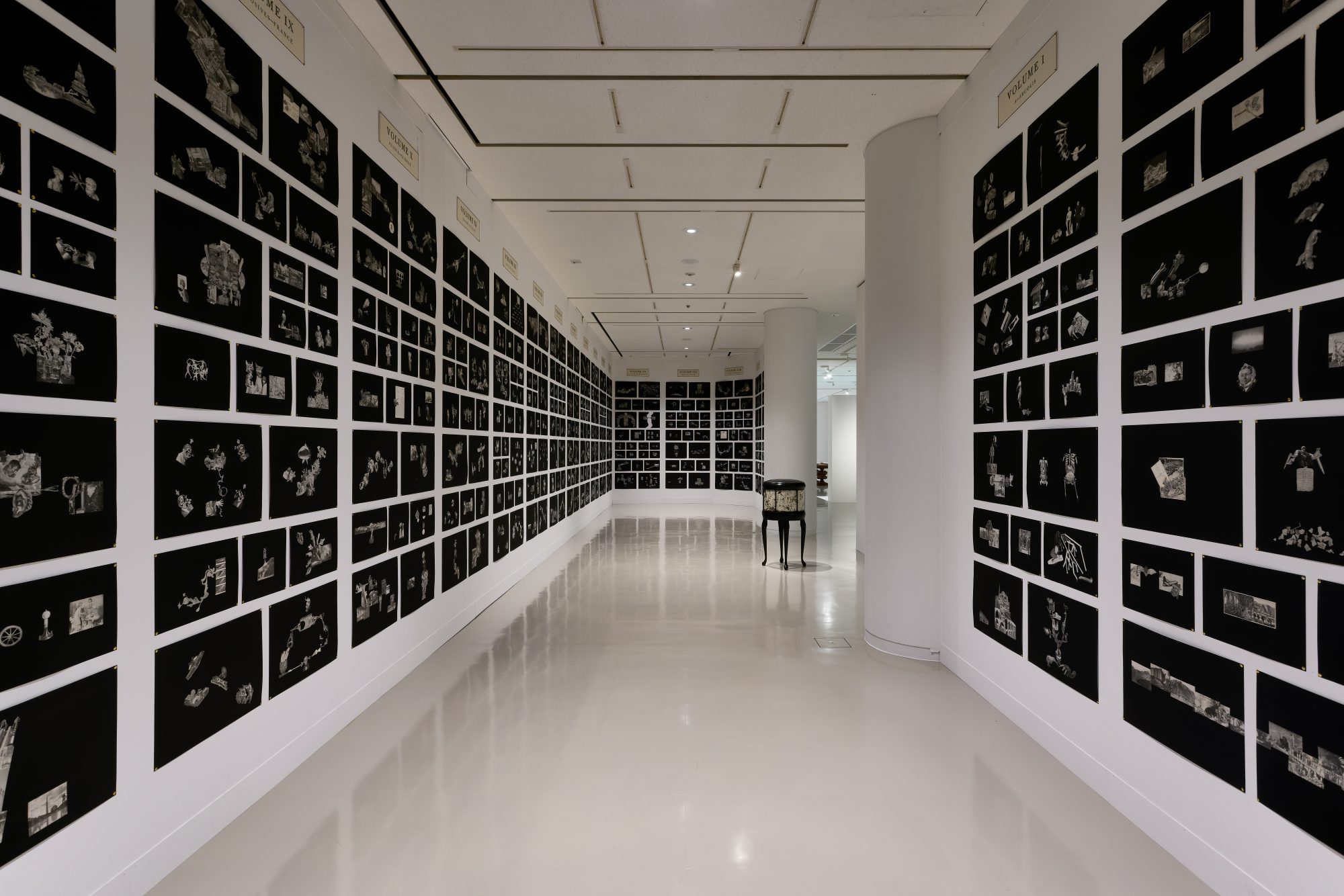 Mel Chin, The Funk & Wag from A to Z (2012). Photo: Kenichi Hanada
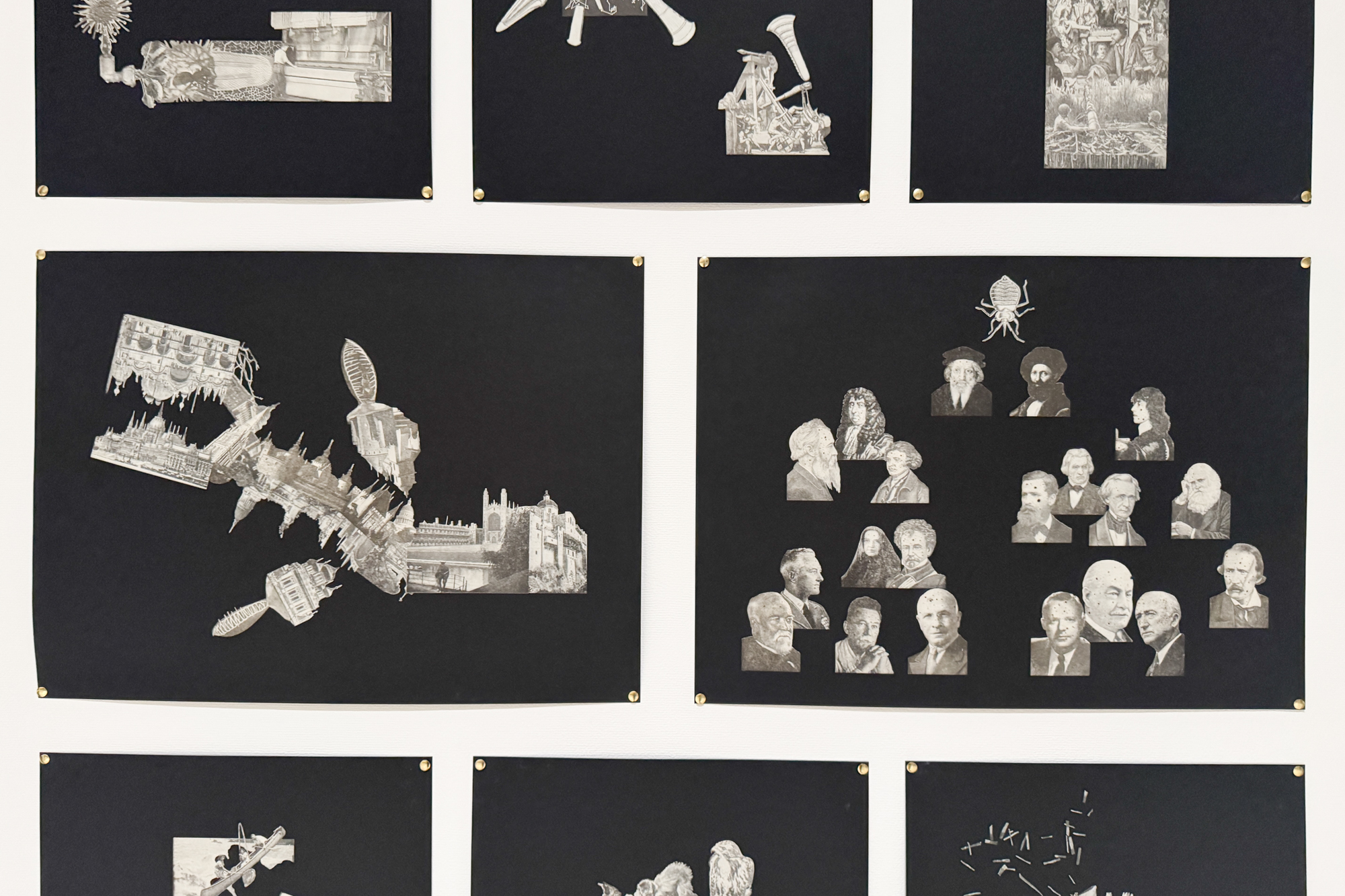 Mel Chin, The Funk & Wag from A to Z (2012), detail
So the world makes me crazy. And your mind says, “Oh, hell, it’s all spinning.” The figure in this collage is messed up, too. It’s all spinning out of control. It’s a collage, a statement made out of images from a book. Where does a piece like this begin? After my parents died, I was helping clean up the house, and I found in a drawer one copy of the Funk & Wagnalls Universal Standard Encyclopedia from 1953. I took it and started to make a few collages out of it. The poetics of this piece lie in the images from that book, because it’s from 1953. I know it’s supposed to be the universal standard encyclopedia of all knowledge. But I’m sorry, by 2011 it’s kind of dated. Books like that have to be taken out or destroyed. It’s old information. So I was thinking, maybe, especially in the light of my parents’ death, that through art, things can live again. That’s where this piece begins.
I started to cut all the images out and re-edit them visually into a piece where my psychology, my humor, my politics, and everything could be exposed from something universal to something deeply personal. I know there’s a great reverence for books, and you’re also aware of social pressure, and I didn’t want to be accused of destroying books, so I kept every little piece, and you’ll see every little piece. If you buy the whole work, you could put all the books back together.
I think the important part of this piece is that it is about the resurrection of all ideas through contemporary art. Taking that which could be discarded and reframing it. It was tough, because each one is a single volume. As soon as one work is made from the pieces of the book, you have fewer images to work with. So it strains the imagination, which it should. The imagination is the right thing to challenge. It came at a certain time for me. I’ll just tell you personally. I have double vision, and my eyes are going bad. You’ve got to be stubborn in this world. You have to fight it, or just try to do something about it. So I just make it worse through this piece.
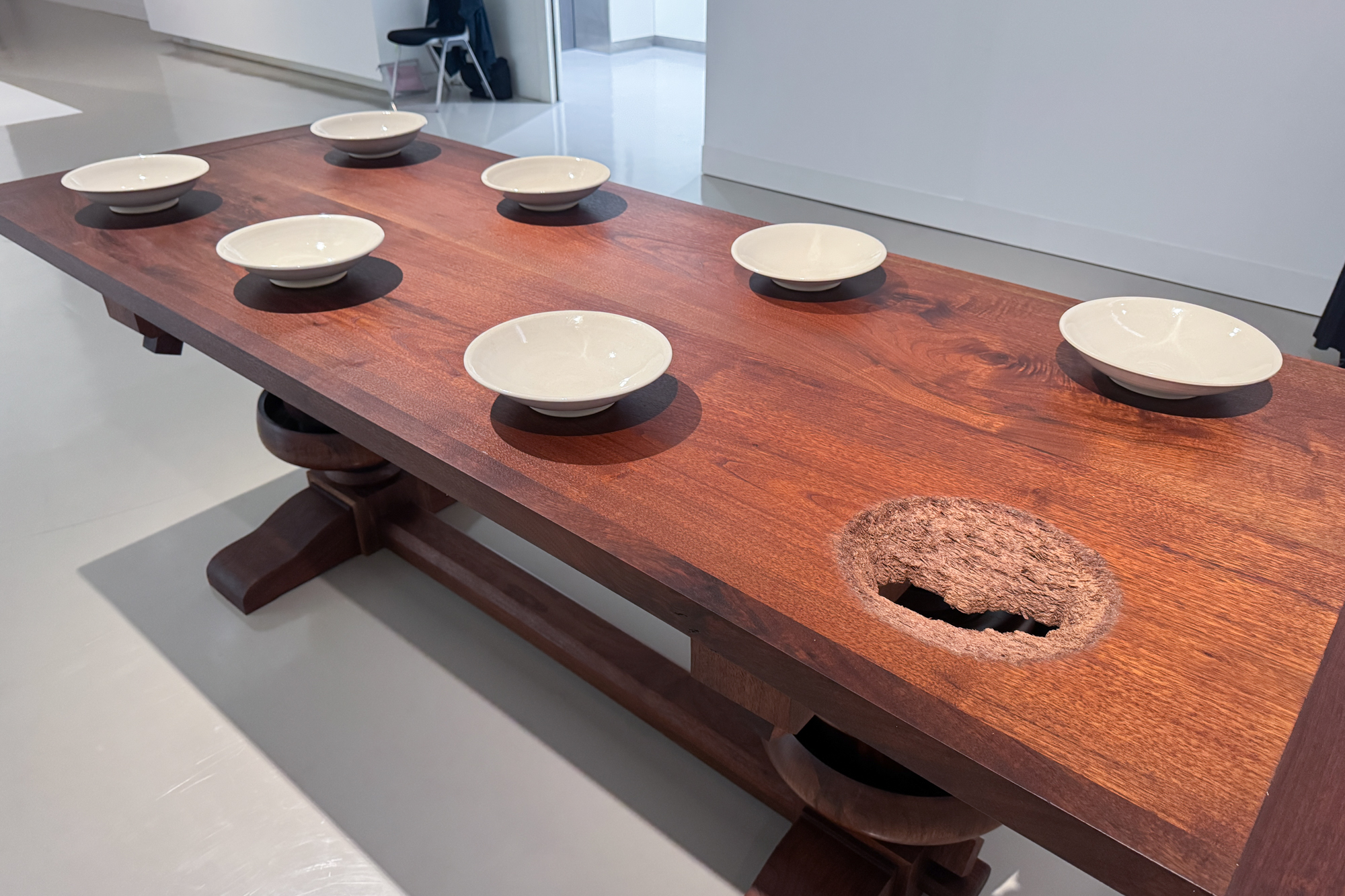 Mel Chin, Plenty (وفره Wafra) (2022)
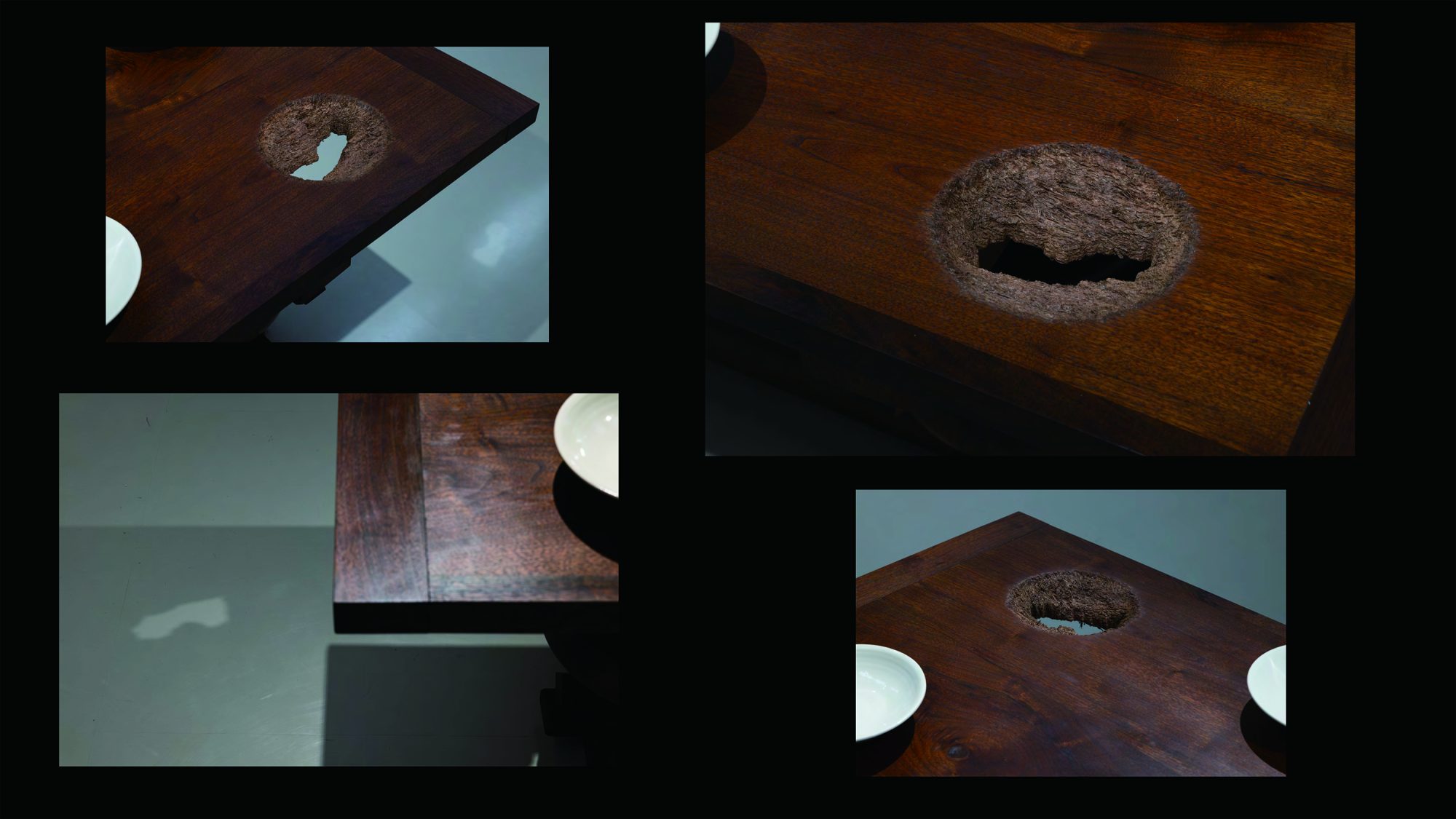 Mel Chin, Plenty (وفره Wafra) (2022). Photo: Ben Premeaux. Courtesy of the artist
Plenty (وفره Wafra) just looks like a trestle table of 12th- or 13th-century design. But if you look at it, it’s not quite right. These forms you will not find in your furniture-design histories. They’re actually formed by Arabic script. When you look at Arabic, how it’s written, it’s the word for “plenty” or “abundance.” That’s what this piece is about. But it’s a table that has an unfortunate last place of serving, which is this hole eaten through it. Emblematic. The shape of the hole is actually the border of the country of Yemen, one of the worst humanitarian disasters, and it may still be going on. Our attention gets shifted all the time, but for five years running, it was the worst humanitarian tragedy in the world because of starvation. So I make a piece like this to think. Again, these pieces are there to remind me that there exists a larger world that I’m part of, and it needs to be remarked on. That is Plenty (وفره Wafra).
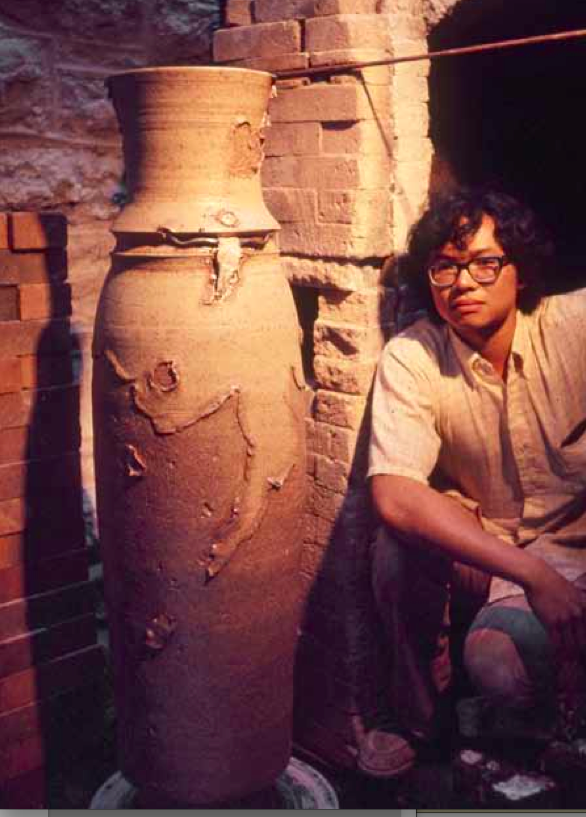 Mel Chin, from the slides used in the lecture. Courtesy of the artist
Ah, I used to be young. When you’re a young artist in art school, you start thinking in terms of your evolution. “I want to be a painter. I want to be a sculptor. I want to be famous. I want to be something.” But then I had to take this ceramics class, and it was something I couldn’t do. And I got involved anyway. I quit all those foolish ideas and just became the janitor of the clay shop, so I could be there all the time, just in the world of clay. Because I needed to know something. I needed to find myself. And clay was the way. I started studying, not just making things. Clay allowed me to study things like Jōmon pottery and many other things. I don’t even know where that came from, but I’m telling you, it liberated me. By finding something I was excited about and didn’t know enough about, I began to look. I began to believe in something again, and to understand the complexity of how ideas are transmitted, and the forms and materials they can be made of. So, clay was very important to me.
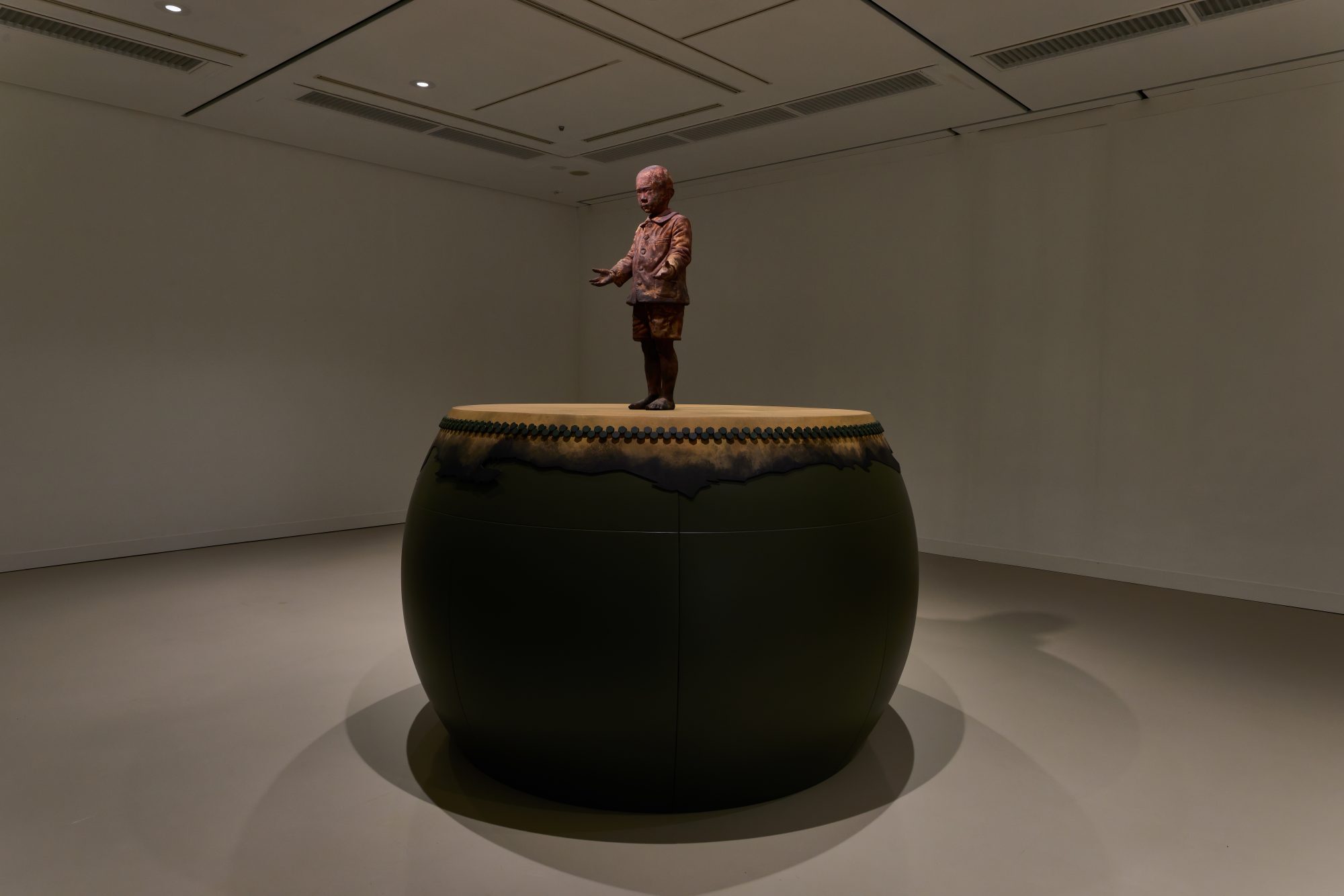 Mel Chin, The Invitation (2026). Photo: Kenichi Hanada
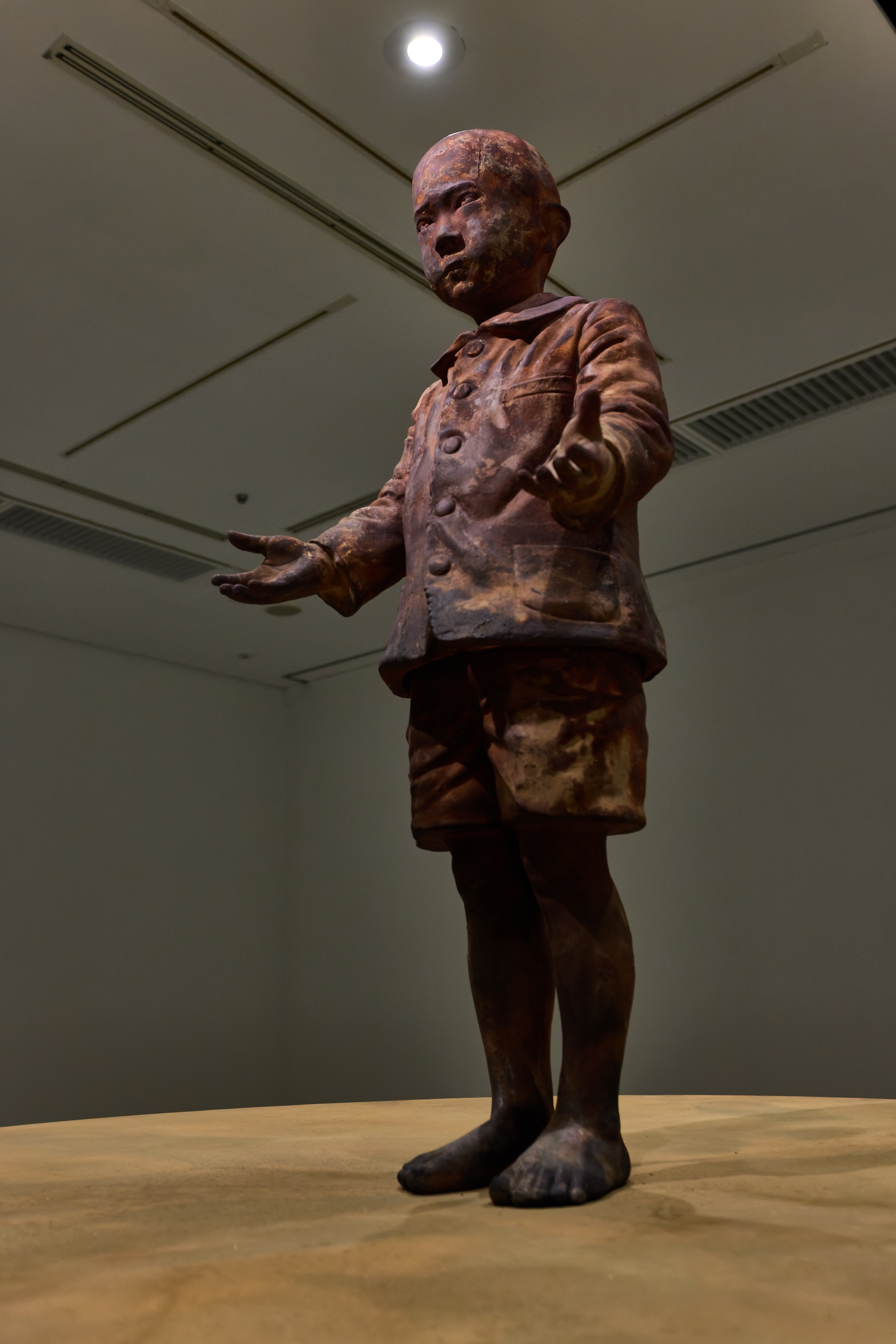 Mel Chin, The Invitation (2026). Photo: Kenichi Hanada
To continue with clay: this piece uses clay too, Bizen ware. Then there’s Keiji Nakazawa, who wrote Barefoot Gen (Hadashi no Gen). How do these things relate? How do you mix them into a piece? I was moved by Barefoot Gen, and I really needed to make something, so you start looking for things. You find, say, a map of the fire-damaged area of Hiroshima, and you look at it and compress it into a form, mathematically. Then there’s the Little Boy bomb. Little Boy has a bolt that I referred to, and a color, and a form, which I studied very carefully. It became the piece that is in this exhibition. The round edge of the work is the outline of the fire map, and the figure is Nakazawa, redone as a six-year-old child.
Why is it made of clay? Not just because of my knowledge of clay, but because clay has a memory. It can embody and trap memory. I wanted to do a piece so we would not forget about Mr. Nakazawa. Because it’s not just the book. It is his principle against nationalism. It is a story, a human story of survival after the bomb. And it’s heavy. What he presents in the first volume is a nightmare that he himself survived. But he did it with art. This was so supremely inspirational that this piece had to be made. The piece is called The Invitation. The bolt head is the same size as the bolts on Little Boy. The shape could be said to echo Fat Man. But the construction of it, all these seams, is very much like the bomb. It’s painted the color of Little Boy. So I pull together my research to either destroy what I think is going to be a good piece of art or confirm what kind of artwork to make. That’s how I go about it.
Then the taiko, the drum that you know best, comes from the war drums of the past. China and Japan have drums, and probably Korea too. He is standing right in the middle of the drumhead, so you can’t play it, and he’s holding out his hands, his arms, to invite you. Because it is a piece about a little boy against another “Little Boy” — a terrifying Little Boy. I think in this case, it’s a little boy made of clay who has survived fire and black rain and everything else. And he stands there, not sad, not hurt, but permanently, to welcome you to join him and stand on this drum, or on this idea. And he’s barefoot on the drum, just to give you a key.
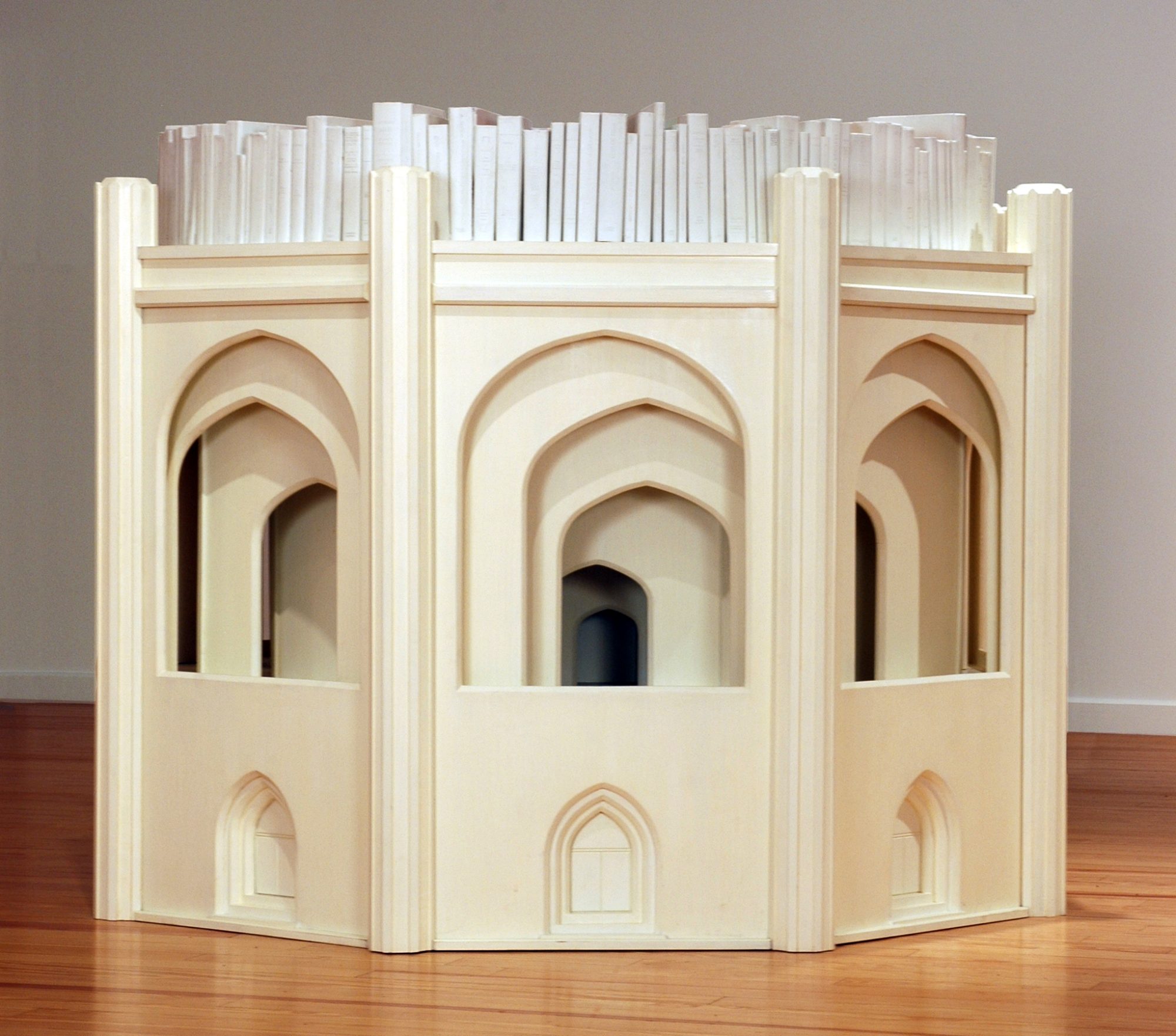 Mel Chin, Circumfessional Hymenal Sea (Portrait of Jacques Derrida) (2006). Courtesy of the artist
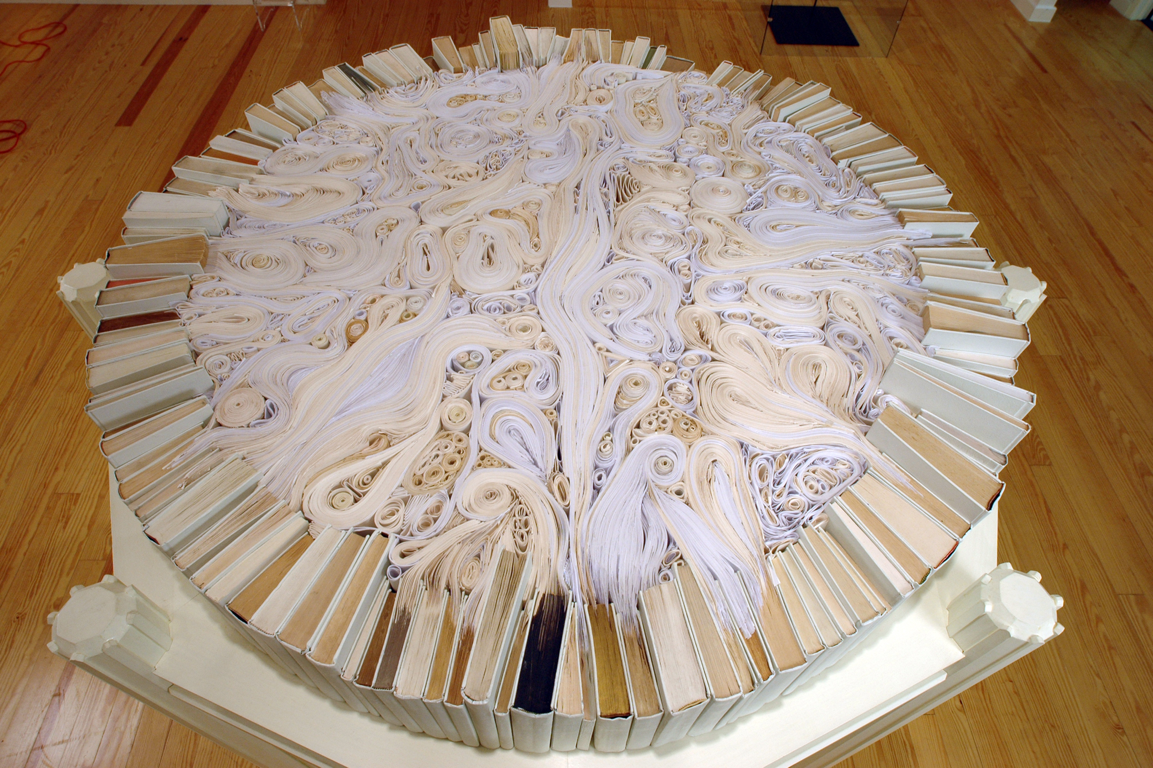 Mel Chin, Circumfessional Hymenal Sea (Portrait of Jacques Derrida) (2006). Courtesy of the artist
Here’s another person: Jacques Derrida. There’s a documentary film about him, Derrida. I met him at Stanford in 1996. He was a funny, humorous, and supremely brilliant man. I really can’t understand all his philosophy. There’s a scene in the film where the director, in front of his library, asks, “Have you read all the books in here?” He says, “No, only four of them. But I read those very, very carefully.” This bugged me to death. When I watched the film, I said, “What?” People were laughing, too. And I was mad. “Why did he say that? I can’t believe that.” But then he passed away. So, eventually, I made a piece.
I’ll tell you about this piece. It’s called Circumfessional Hymenal Sea (Portrait of Jacques Derrida). What made this piece happen? It’s based on a ship’s compass. I had a dream that I was on a clipper ship, an old clipper ship. There was a compass like this one, and it was spinning crazily, and I looked down at it. As I kept looking, the directions turned into the tops of books. The water started spinning and moving around into this ocean, this roiling sea of pages. I woke up and said, “That’s it. Now I know.” He didn’t have to explain it to me. It is always four books. Because to understand things, it could be the Bible or Marx or Mishima, or somebody else on either side — oppositional ideas that are there for that moment while you seek direction and understanding. Then it shifts again, and it’s another four books that you must read very carefully to understand the world.
The piece is not in this exhibition, but I want to make a point about it as well. It’s also about the idea of research, finding out what books are there. I took pictures of his entire library, and on the spines in the piece are the names of those books. The structure is modeled on the chapel of King’s College, Cambridge, in England, the university where there was opposition to giving him an honorary doctorate. But I felt he deserved this piece.
Now, why did I bring this piece up? Because one thing he said was important to me, which is how to approach justice. I don’t know exactly if he said it this way, but this is how I take it. Justice is a concept you should never believe can be obtained. Because if you think you’ve got it, it won’t be complete. It will elude you, and injustice will continue. In other words, this striving for a world of peace is not something you should ever think you will finish. It’s an active principle, like justice, that you have to keep working at. You have to believe in it, but you also have to keep taking action to help make it happen.
I’m not telling you this. I’m telling myself this, because I’ve come to your city, which is truly engaged in this kind of thinking. I’m here not to talk so much about my work. There are only a few things to tell you about. Rather, I’m expressing to you how much this city, and the ideas that it represents, teach me that I cannot stop. I will not stop. I’ve come here to commit myself to continuing this effort along the path toward justice and toward peace, in any shape or form I can. I want to thank you for coming.
The 12th Hiroshima Art Prize: Mel Chin
July 25 – October 12, 2026
Hiroshima City Museum of Contemporary Art, Gallery B
Curator: Motoko Suhama (Curator, Hiroshima City Museum of Contemporary Art)
https://www.hiroshima-moca.jp/exhibition/melchin
Unless otherwise noted, all images by ART iT.
The Lecture@Museum series presents lectures held in connection with exhibitions and related programs, edited and published by ART iT with the cooperation of those involved.